- Home
- Wealth is a Skill
Wealth is a Skill
₹499.00
₹289.00
🔥 Save 42%
Piracy Free
Secure Transactions
Express Delivery
Eco‑Conscious Packaging
- Binding: Paperback
- Weight: 250 g
- Dimensions: 1.27 x 14 x 22 cm
- Language: English
- Number of Pages: 168 pages
- SKU: 20260216
- Publisher: Bigfoot Publications
- Publication Date: 16th Feb 2026
- Edition: 1st
- ISBN-13: 978-9363479203
- Generic Name: Book
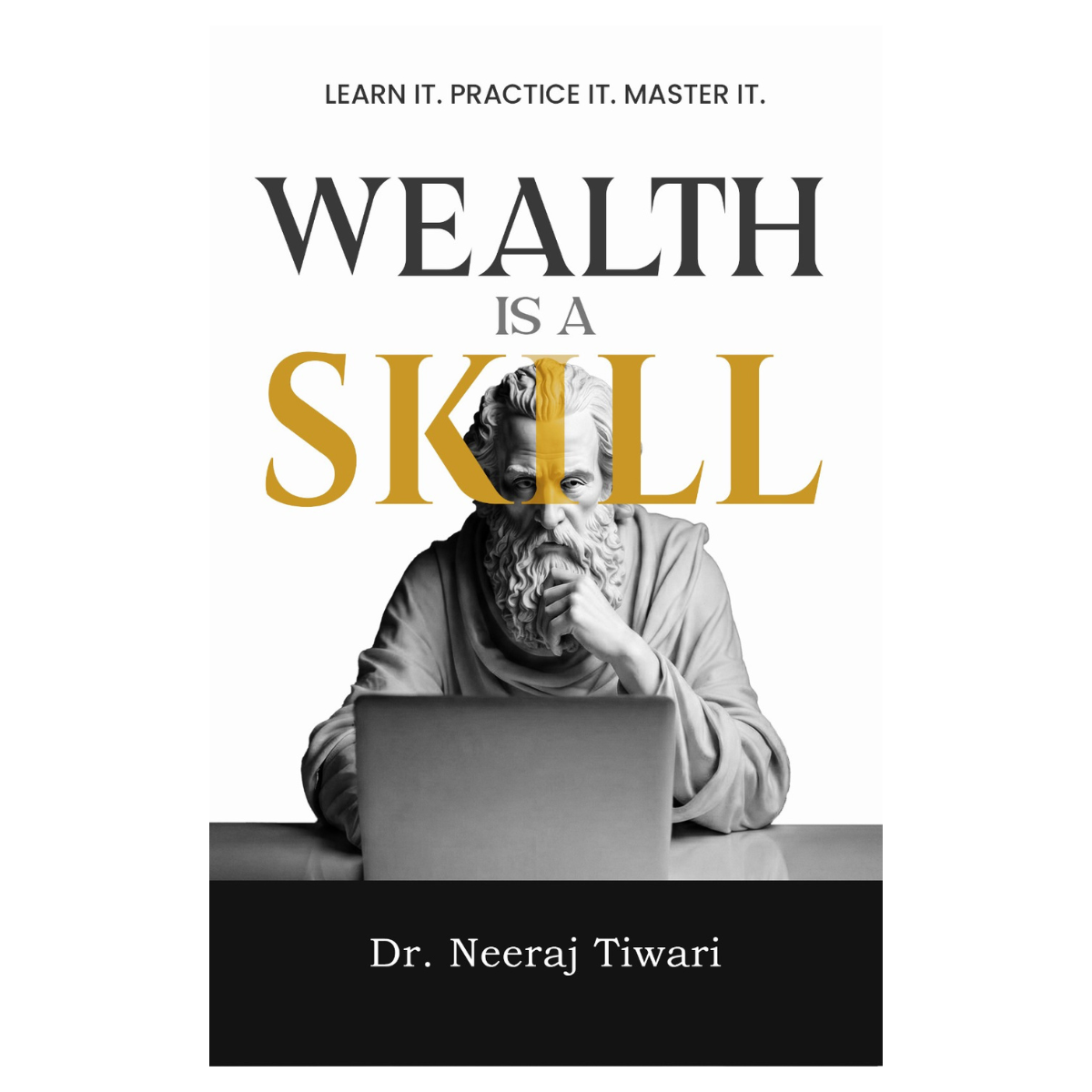
Wealth Is a Skill – Learn It. Practice It. Master It. by Dr. Neeraj Tiwari is an ambitious, deeply reflective, and comprehensive work that repositions wealth from being a product of chance, inheritance, or elite access to being a consciously developed life skill rooted in mindset, discipline, learning, and ethical responsibility. The book opens with a powerful conceptual shift by challenging the traditional perception of wealth as a static outcome and instead presenting it as a dynamic, evolving capability that individuals can cultivate regardless of their starting point.
This reframing immediately sets the tone for the entire work, empowering readers to take ownership of their financial lives and view their current circumstances not as limitations but as raw material for growth. Dr. Tiwari skillfully blends philosophy with practicality, emphasizing that before wealth can be built externally, it must first be constructed internally through a mindset that values patience, adaptability, and long-term thinking. The early chapters focus heavily on this psychological foundation, exploring scarcity versus abundance thinking, limiting beliefs, fear of failure, and the emotional relationship people have with money, making a strong case that financial outcomes are often determined less by income and more by behavior, habits, and perception.
This emphasis on mindset is one of the book’s greatest strengths, as it addresses the root causes of financial instability rather than merely its symptoms. Moving from mindset into application, the book provides a clear and structured exploration of financial literacy, covering budgeting, saving, credit, debt management, and financial planning in a manner that is accessible yet intellectually grounded. Instead of portraying budgeting as restrictive or saving as sacrifice, the author reframes both as tools of alignment and self-respect, reinforcing the idea that money should serve life goals rather than control them. The treatment of credit and debt is particularly balanced, avoiding simplistic judgments and instead encouraging readers to distinguish between strategic leverage and destructive financial behavior.
As the narrative progresses, the book transitions naturally into wealth growth through investing, where principles such as compounding, diversification, risk management, and portfolio construction are explained with clarity and restraint. Dr. Tiwari avoids sensationalism and speculative hype, positioning investing as a disciplined, long-term practice rather than a shortcut to riches, which adds credibility and aligns well with the book’s core thesis of wealth as a skill developed over time. The sections on entrepreneurship further expand this framework by presenting business creation not as a glamorous pursuit but as a structured problem solving process grounded in opportunity identification, planning, execution, and continuous learning.
Entrepreneurship is portrayed as accessible rather than exclusive, reinforcing the idea that value creation, when guided by discipline and ethical intent, is one of the most powerful engines of wealth. The discussion on funding, marketing, scaling, and growth highlights the importance of strategic thinking, adaptability, and resource optimization, reflecting the author’s practical understanding of real-world business dynamics. A particularly relevant and forward-looking aspect of the book is its engagement with technology and the digital economy, where topics such as fintech, online trading, cryptocurrencies, and the future of finance are addressed with both optimism and caution. Rather than promoting specific trends, the book emphasizes digital literacy, adaptability, and continuous learning as essential skills for navigating an increasingly complex financial landscape, making the content resilient to rapid technological change. What truly distinguishes Wealth Is a Skill from many books in the personal finance genre, however, is its strong ethical and societal dimension.
Dr. Tiwari does not treat wealth as an isolated personal achievement but situates it within a broader social context, addressing economic inequality, intergenerational wealth, ethical decision making, and the responsibility that accompanies financial success. Wealth, in this framing, is not merely about accumulation but about stewardship, impact, and sustainability, a perspective that adds depth and moral clarity to the discussion. The book consistently reinforces the idea that true wealth creation should uplift not only individuals but also families, communities, and future generations. Stylistically, the writing is clear, thoughtful, and measured, striking a balance between academic seriousness and reader accessibility.
The tone is instructive without being preachy, motivational without being unrealistic, and reflective without being abstract. While the book does not rely heavily on step-by-step formulas or technical models, this appears to be a deliberate choice aligned with its purpose: to reshape how readers think about wealth rather than overwhelm them with tactics divorced from mindset and context. As a result, the book is particularly well-suited for students, professionals, entrepreneurs, first-generation wealth builders, and anyone seeking a sustainable, values-driven approach to financial success.
Overall, Wealth Is a Skill stands as a mature, holistic, and intellectually grounded contribution to the wealth literature, offering readers not just financial knowledge but a philosophy of money that integrates discipline, learning, ethics, and long-term vision, and in doing so, it successfully fulfills its promise of teaching wealth not as a privilege to be inherited, but as a skill to be learned, practiced, and ultimately mastered over a lifetime.
Prerna Shambhavee –
“Wealth Is a Skill” by Dr. Neeraj Tiwari completely changes how you think about building a secure future. Instead of wealth being about winning a lottery, being born rich, or just having good luck, this book teaches that financial success is a learnable skill, like playing an instrument or learning to cook. You just need to learn the rules.
The book is structured to guide readers through different stages of money management. Dr. Tiwari covers budgeting, investing, entrepreneurship, and risk management with clear, simple instructions that are easy for anyone to follow. His explanation of how to create a simple yet strong business plan from scratch is a practical example that makes a complex idea very manageable. He is telling us that with a good idea, a clear plan, and consistent work, anyone can build a business that creates wealth.
It doesn’t just focus on the technical side of money, though. The book looks at how your mindset and background shape your view on money. We all have beliefs about wealth that come from our family or community, and these beliefs affect the decisions we make every day. By exploring these ideas, the book helps us identify our biases so we can make better, more deliberate financial choices. It also urges readers to be flexible and open to learning in a fast-moving world, ensuring we are prepared for whatever changes the future holds.
All-in-all,”Wealth Is a Skill” is a powerful tool. It’s practical, motivating, and incredibly easy to understand. For any professional, student, or entrepreneur who wants to feel confident and in control of their financial destiny, this book is an excellent guide. It demonstrates that with education and dedication, a stable and prosperous financial future is within everyone’s reach.
Mohd Zoha –
This book doesn’t just talk about money it teaches you how to think about money. From budgeting and investing to mindset and discipline, it breaks wealth down into something practical, learnable, and actually achievable. What stood out to me is how it connects financial growth with personal growth reminding you that building wealth isn’t just about numbers, but about habits, patience, and clarity.
Simple, honest, and straight to the point perfect for students, working professionals, or anyone trying to take control of their financial future.
Not a “get rich quick” guide, but a “build it right” mindset.
Mohammad Shumaal –
Wealth is a Skill presents a refreshing and practical perspective on wealth creation. Instead of portraying wealth as a matter of luck or privilege, Wealth is a Skill emphasizes that becoming wealthy is a learnable skill—one that anyone can develop with the right mindset and consistent effort.
One of the standout ideas in the book comes from Chapter 4, Identifying Opportunities. Here, the author beautifully explains that in the “bustling marketplace of life,” opportunities often appear like fleeting shadows—easy to miss if one is not attentive. This highlights the importance of developing a sharp eye, understanding timing, and staying aware of the world around us.
The book focuses on simple yet powerful principles:
Learn → Practice → Master.
According to the author, wealth is not something you stumble upon—it is something you build through continuous learning and disciplined application.
Overall, the writing is clear, straightforward, and highly motivating. It avoids unnecessary complexity and instead delivers actionable insights that readers can apply in their daily lives
Shivam Maurya –
This book by Dr. Neeraj Tiwari is not just another finance book—it is a complete mindset transformation.
What makes this book stand out is how clearly it explains that wealth is not about luck or background, but a skill that can be learned and developed over time. The author has done an excellent job breaking down complex financial concepts into simple, practical lessons that anyone can apply.
One of the most impactful sections for me was on crisis management and financial resilience. It highlights that true wealth is not just about earning money, but about protecting and sustaining it during difficult times. The emphasis on emergency funds, diversification, and smart decision-making adds real-world value.
Another powerful aspect is the focus on generational wealth and legacy. This book goes beyond personal success and teaches how to build something that lasts and benefits future generations.
The final chapters on execution—setting goals, budgeting, tracking progress, and adapting—make this book highly practical. It doesn’t just inspire you; it gives you a clear roadmap to follow.
You can truly feel the effort, research, and experience that Dr. Neeraj Tiwari has put into this book. Every chapter adds value and builds a strong foundation for financial growth.
Highly recommended for students, young professionals, and anyone who wants to take control of their financial future.
Agar chaahe to main iska short 100-word version ya Hindi version bhi bana deta 👍
Digvendra Singh –
I kept wondering why earning more never felt like enough. Chapter 1 answered it bluntly — strong income with weak habits still leaves you broke. That hit hard.
What I appreciated is the range. This isn’t just a budgeting book. It goes from the basics of saving and investing to navigating recessions, building multiple income streams, managing time as an asset, and eventually thinking about generational wealth. Chapter 9 on decision-making stayed with me — there are no perfect choices, only conscious ones.
Chapter 3 made the clearest distinction I’ve read anywhere: saving keeps you safe, investing moves you forward. Two different jobs entirely.
Wealth here is treated as a discipline you build, not a destination you reach.
Om Sen –
I recently read Wealth Is a Skill by Dr. Neeraj Tiwari, and I found it to be a very practical and eye-opening book. What I liked most is the main idea — that wealth is not something you are born into or just lucky to have, but something you can learn and build over time.
From the beginning, the book made me rethink how I look at money and success. It doesn’t just talk about earning more, but also about understanding money, managing it wisely, and making better long-term decisions. I found this approach very realistic and useful.
The writing style is simple and clear, which makes it easy to follow even if you are not from a finance background. The author explains concepts like budgeting, investing, and risk in a way that doesn’t feel complicated. I liked how each idea connects to real-life situations, making it easier to apply.
Another strong point is the focus on mindset. The book shows that building wealth is not just about numbers, but also about habits, discipline, and thinking ahead. It made me realize how important consistency and patience are when it comes to financial growth.
I also appreciated that the book doesn’t promise quick success or shortcuts. Instead, it focuses on steady progress and learning through experience. This made it feel honest and trustworthy.
What stood out to me is how the book is useful for different types of readers. Whether you are a student, a working professional, or someone interested in starting a business, there is something valuable to take away.
Overall, I found Wealth Is a Skill to be a very informative and motivating read. It gave me a clearer understanding of how to take control of my financial future. If you want to improve your money habits and think more seriously about wealth building, I would definitely recommend this book.
Avinish Pathak –
There’s a refreshing honesty in Wealth Is a Skill by Dr. Neeraj Tiwari. Instead of selling dreams of overnight success or glorifying hustle culture, the book makes a grounded argument: wealth is less about luck or background and more about habits, mindset, and consistent decision-making.
It feels like a practical conversation rather than a lecture. Dr. Tiwari doesn’t try to overwhelm you with jargon or complex financial theory. Instead, he breaks down ideas—budgeting, investing, entrepreneurship—into approachable, actionable insights.
The writing is clear, direct, and intentionally accessible, which makes it especially useful for readers who are just starting to take control of their finances.
The book is about reframing how you think about money. It pushes you to see wealth not just as income or assets, but as a discipline built over time. There’s a strong emphasis on mindset—how your beliefs about risk, patience, and growth shape your financial outcomes.
Another notable aspect is its ethical undertone. The book doesn’t promote reckless ambition or shortcuts. It consistently ties wealth-building to responsibility, long-term thinking, and self-awareness. That balance between ambition and groundedness gives the book credibility.
Why you should read this book:-
💴It simplifies wealth-building into learnable, repeatable skills rather than vague advice.
💴Helps reshape your mindset around money, risk, and long-term growth.
💴Offers practical, easy-to-follow guidance without overwhelming jargon.
💴Encourages disciplined habits that are realistic to sustain.
💴Ideal for beginners, students, and professionals looking for clarity and direction.
💴Connects financial success with personal growth and ethical thinking.
Wealth Is a Skill doesn’t promise to make you rich overnight—and that’s exactly why it works. It’s a steady, honest guide for anyone willing to think differently about money and put in the effort to build something lasting.
Must read♥️♥️
Partha Pratim Mandal –
📑Wealth is a Skill by Dr. Neeraj Tiwari
If there’s one idea that quietly challenges everything we’ve been taught about money, it’s this: wealth isn’t inherited, stumbled upon, or reserved for a select few; it’s learned. And that is exactly the foundation on which Wealth is a Skill by Dr. Neeraj Tiwari stands tall.
This isn’t just another financial literacy book trying to overwhelm you with jargon or market predictions. Instead, it feels like a calm, structured conversation; one that patiently walks you through the idea that building wealth is less about chasing quick wins and more about mastering a discipline over time.
What makes this book stand out is its holistic approach. It doesn’t isolate money as a standalone concept. Rather, it connects the dots between mindset, habits, knowledge, and ethics. From the table of contents alone, you can sense the intentional progression, starting with foundational thinking, moving into financial literacy and investing, and then expanding into entrepreneurship, psychology, and even global perspectives. It’s not just about earning more; it’s about thinking better.
One of the strongest aspects of this book is how it reframes financial growth as something deeply personal. The chapters on the psychology of wealth and personal development hit differently; they push you to reflect, not just calculate. Because let’s be honest, most people don’t struggle with money due to lack of information, but due to lack of clarity and consistency. This book addresses that gap.
Another refreshing element is its practicality. Whether it’s budgeting, navigating economic cycles, or understanding risk, the insights feel actionable without being intimidating. It doesn’t promise overnight success, and that’s exactly why it feels trustworthy. Instead, it emphasizes steady, intentional growth, especially valuable for first-generation wealth builders trying to create something from scratch.
However, if you’re expecting aggressive, high-risk investment strategies or quick-money hacks, this might not be your kind of read. The book leans more toward long-term thinking and disciplined execution, which, frankly, is what most readers need, even if it’s not what everyone wants.
What stayed with me after finishing this book is a quiet shift in perspective: wealth isn’t a destination you arrive at, it’s a skill you keep refining. And like any skill, it demands patience, learning, and the willingness to evolve.
Arzoo chaudhary –
BOOK REVIEW
Wealth Is a Skill by Dr. Neeraj Tiwari appears to be a motivational, personal-finance book built around one central idea: wealth is not just about luck, but about learned habits, disciplined thinking, and consistent action. Based on the available summaries and reviews, it focuses more on mindset and practical behavior than on complex investing theory.
A major theme is that wealth begins with a shift in mindset, especially moving away from scarcity thinking and toward planning, responsibility, and long-term discipline. The book also appears to stress budgeting, saving, developing useful skills, and taking action instead of waiting for the “perfect” financial moment. In that sense, it treats wealth as the result of repeated habits rather than sudden breakthroughs.
Overall, Wealth Is a Skill looks like a useful self-help finance book for beginners and anyone who wants a confidence boost around money. It seems especially suited to readers who want simple, action-oriented lessons about building better financial habits. If your goal is inspiration and clarity, it should work well; if you want detailed financial planning, it may feel too broad.
HIGHLY RECOMMENDED
Huma Fatma –
Most people think wealth is just “getting lucky” or having a 9-5 that pays well. This book basically says: Wealth is a skill you practice, just like coding, gaming, or lifting (that’s actually true) Instead of the usual “get rich quick” fluff, it treats financial freedom like a professional craft.
The main argument is that wealth isn’t something that happens to you, it’s something you build by mastering specific “skills” like negotiation, emotional discipline, and high value networking.
It moves away from boring “penny pinching” advice and focuses on how to increase your value so you can play the game at a higher level