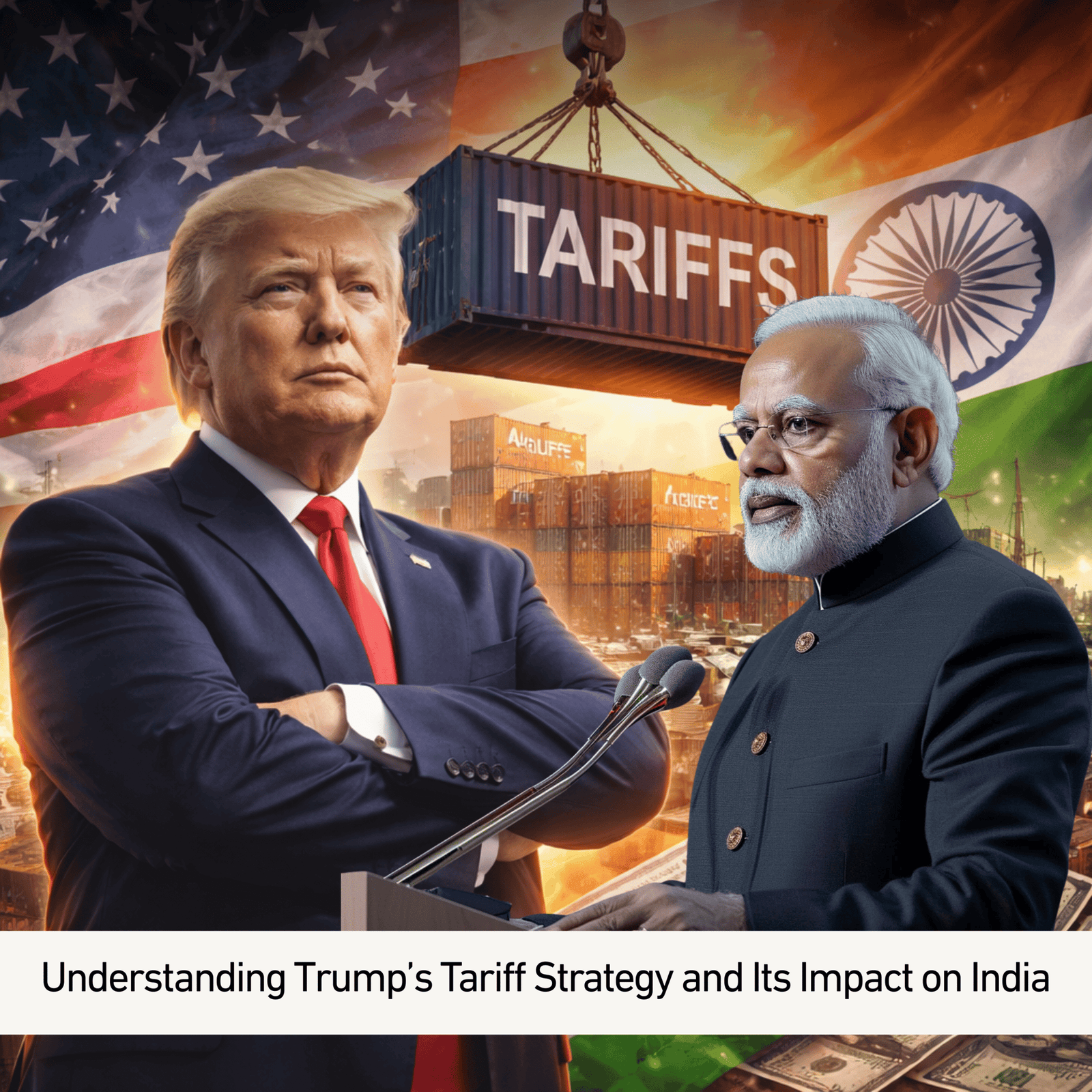
Understanding Trump’s Tariff Strategy and Its Impact on India
As an author and observer, I want to raise a few simple and important questions.
You all must have heard the recent news about the India US trade deal. It has been widely presented as a positive development. But the most basic question remains unanswered. On what basis is this deal being described as positive for India?
As reported, Donald Trump imposed a fifty percent tariff on countries equivalent to the tariffs those countries had imposed on the United States. India also faced a fifty percent tariff under this approach. This is a factual starting point that needs to be acknowledged before drawing any conclusions.
It is being said that American products may now become cheaper in India. That may be true, and that is fine. Lower prices can benefit consumers in the short term.
It is also being said that India will stop buying Russian oil. That may be a strategic decision, and one can accept that as well. Further, India may shift to buying oil from Venezuela instead. That too is being presented as a viable alternative.
However, this raises an important and practical question. What does India actually gain from Russia today, and what will India realistically gain from Venezuela tomorrow? These are not emotional questions. They are economic and strategic questions that deserve serious evaluation.
Another aspect that deserves attention is timing. Just a day ago, a small part of the Epstein file was reportedly leaked. The very next day, the trade deal was signed. Whether these two events are connected or not is not for speculation here. But the timing does raise questions in the public mind, and those questions cannot simply be dismissed.
The core question therefore remains unchanged. How exactly is this trade deal in India’s favor? What are the clear, measurable long term benefits for the Indian economy, Indian industries, and Indian resources?
If this deal was inevitable, another question naturally follows. Why was it not finalized a year ago when the United States had already invited India to the negotiating table? If the terms were largely similar, why was there such a long delay?
Short term market reactions are often highlighted as proof of success. Indices move up, sentiment improves, and headlines look encouraging. But markets frequently react to perception and emotion. They do not always reflect long term economic reality.
The real impact of any trade deal is visible only over time. It is visible in export competitiveness, in domestic manufacturing strength, in energy security, and in how efficiently a country uses its resources.
In the long term, the concern is whether India’s resources are being optimally utilized or gradually wasted. The concern is whether the country is incurring losses that are not immediately visible but will surface over time. These are not dramatic claims. These are structural concerns that deserve attention.
This is not about defending or opposing any individual or any government. These are not conclusions. These are questions. And in a healthy democracy and economy, questions deserve calm, factual, and transparent discussion.
Only with such discussion can we truly assess where the country is heading and whether decisions being taken today will strengthen India tomorrow.

Dr. Neeraj Tiwari, PhD
I write about business leadership, workplace culture, and professional self-improvement-ideas that help individuals grow with clarity, lead with confidence, and build meaningful, successful careers.