War, Power, and Petrodollars The Real Story Behind the U.S.–Israel–Iran Conflict
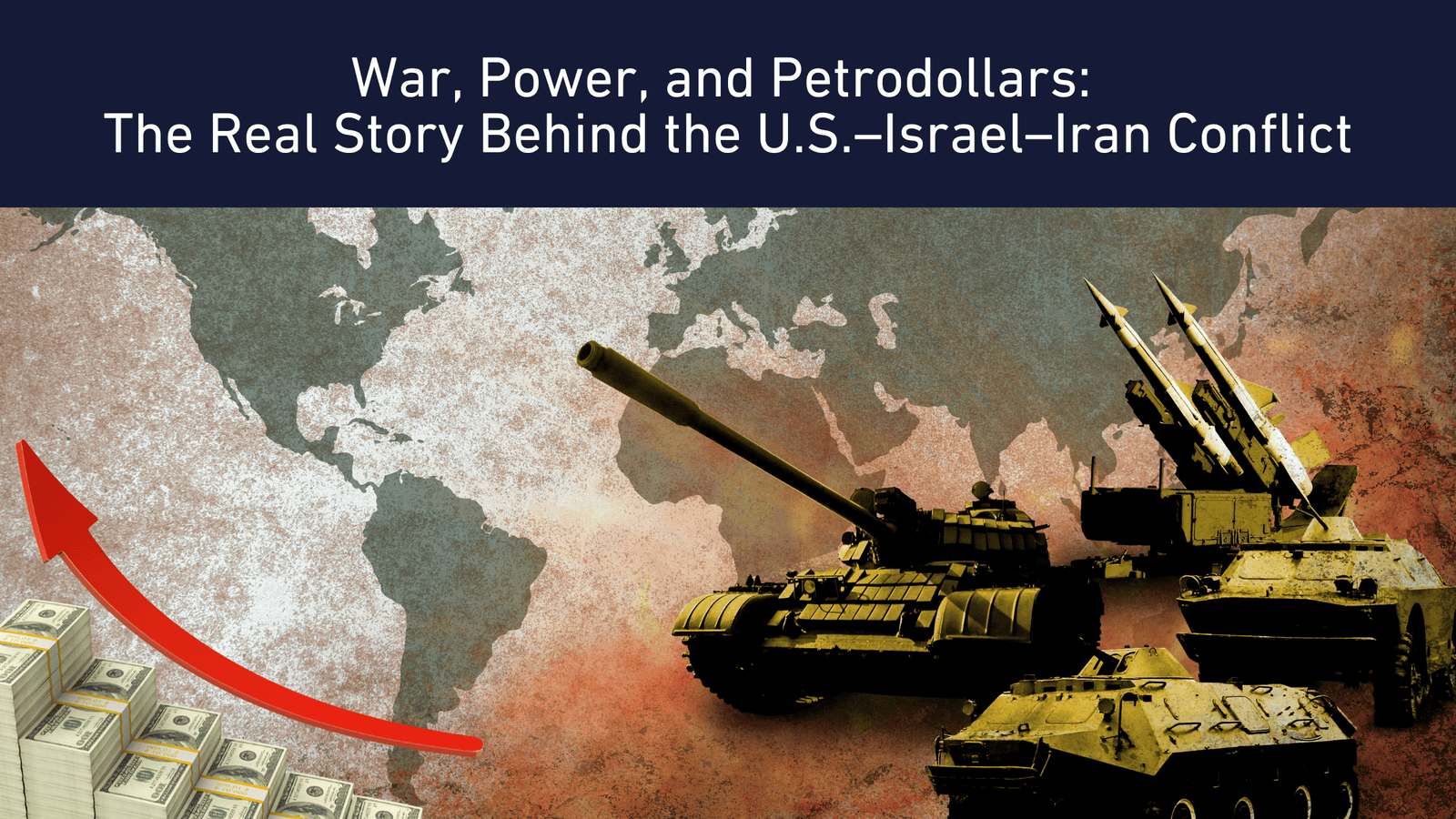
History teaches us a simple lesson. Wars rarely begin for the reasons that appear on the surface.
When tensions rise between the United States, Israel, and Iran, public attention is drawn to missiles, security threats, and diplomatic statements. But beneath every geopolitical eruption lies a deeper structure shaped by political survival, economic dominance, and long term strategic control.
To understand the present conflict, two layers must be examined. One is immediate and visible. The other is structural and enduring.
The Immediate Reason Political Pressure at Home
Political leaders are not operating in isolation from domestic realities. Internal pressure has historically influenced external decisions.
In Israel, Prime Minister Benjamin Netanyahu has faced corruption allegations and sustained political opposition. In the United States, former President Donald Trump has been surrounded by legal and political controversies that continue to dominate public discourse.
History offers several examples where leaders under pressure at home were involved in major external conflicts. Whether during World War II or around the time of the Russian Revolution, domestic instability often coincided with international confrontation. Each case is different, but the pattern remains consistent.
When legitimacy is questioned internally, external conflict can shift attention, consolidate support, and redefine the narrative. War in such moments becomes not only a military decision but also a political instrument.
The Long Term Reason Oil and the Dollar System
If immediate politics explains the timing, economics explains the scale and persistence.
Iran has continued to sell a significant portion of its oil to countries such as China, often accepting payments outside the traditional dollar based framework. The global oil trade has long supported the dominance of the United States dollar, commonly referred to as the petrodollar system.
Any challenge to this system is viewed as a strategic threat. History shows that nations attempting to operate outside this framework have faced intense pressure. The experiences of Iraq, Libya, and Venezuela are frequently cited in discussions about oil, currency, and geopolitical power.
Energy is not just a commodity. It is leverage. And currency dominance is not just finance. It is global influence.
The Bigger Geopolitical Picture
Nothing in geopolitics happens overnight. No war is born in a single week. No power structure collapses in a decade. These shifts unfold over generations.
What we are witnessing today is not merely a regional confrontation but a possible realignment of power in the Middle East. This region has always been more than territory. It is a crossroads of energy routes, military alliances, financial systems, and ideological influence.
To understand such conflicts, we must move beyond emotion and headlines. Wars are rarely about one event. They are about control of resources, control of narratives, and control of the future.
The years ahead will determine whether this conflict remains contained or becomes a defining chapter in global geopolitics. But history will remember one thing clearly. When power, oil, and political survival intersect, the consequences extend far beyond borders.

Dr. Neeraj Tiwari, PhD
I write about business leadership, workplace culture, and professional self-improvement-ideas that help individuals grow with clarity, lead with confidence, and build meaningful, successful careers.