Is India Really Slipping in the Global Economy Rankings? Let’s Understand the Reality.
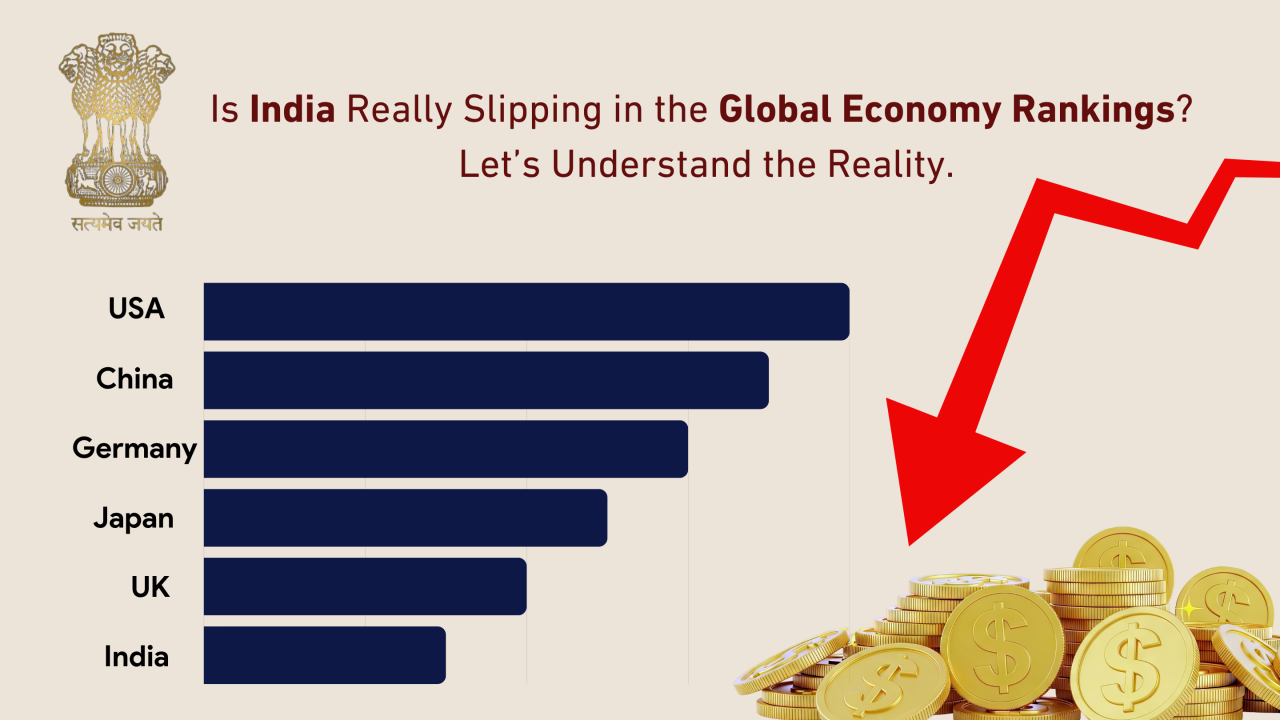
As per the latest update from the International Monetary Fund (April 18 report), India’s position in the global economy rankings has seen a shift raising concern and confusion.
India’s economy is currently estimated at $4.15 trillion. Not long ago, we proudly overtook economies like the UK and Japan. But now, slipping behind them again and moving to the 6th position naturally raises an important question:
What changed?
Let’s break this down without noise, only facts:
1. Currency Depreciation – The Silent Factor
GDP rankings are calculated in US dollars. When the Indian Rupee weakens against the US Dollar, even if the domestic economy grows, its global dollar value appears smaller.
So, this is not just about growth it’s about exchange rates impacting perception.
1. GDP Base Year Revision
India recently updated its GDP base year to 2022–23. Earlier calculations were based on much older benchmarks, which made growth numbers appear inflated due to outdated price structures and inflation effects.
This revision brought more realism but also revealed that some past growth estimates were overstated in nominal terms.
1. The Japan Paradox
Interestingly, Japan despite facing slow growth and even contraction phases still moved ahead. Why?
Because their currency movements and measurement stability played a role in maintaining higher dollar valuation relative to India.
Now the Big Question: Can India Reach $5 Trillion by 2027?
To move from $4.15 trillion to $5 trillion in just one year, India would need nearly 20% nominal GDP growth.
Let’s be practical.
India’s average growth over the last decade has been around 6–7%. A sudden jump to 20% is not just ambitious it’s economically unrealistic under current conditions.
So what should we focus on? Instead of obsessing over rankings, the real questions are:
- Are incomes rising?
- Are jobs being created?
- Is productivity improving?
- Is wealth reaching the grassroots?
Because ultimately, an economy is not just its size — it’s the quality of life it creates.
Rankings may fluctuate. Headlines may change.
But real economic strength is built over decades not quarterly reports.
The journey to a $5 trillion economy is still alive. But timelines need realism, not optimism alone.

Dr. Neeraj Tiwari, PhD
I write about business leadership, workplace culture, and professional self-improvement-ideas that help individuals grow with clarity, lead with confidence, and build meaningful, successful careers.