Freedom of Speech Comes with Freedom to Be Accountable? The Ruchika Singh Case Raises an Important Question
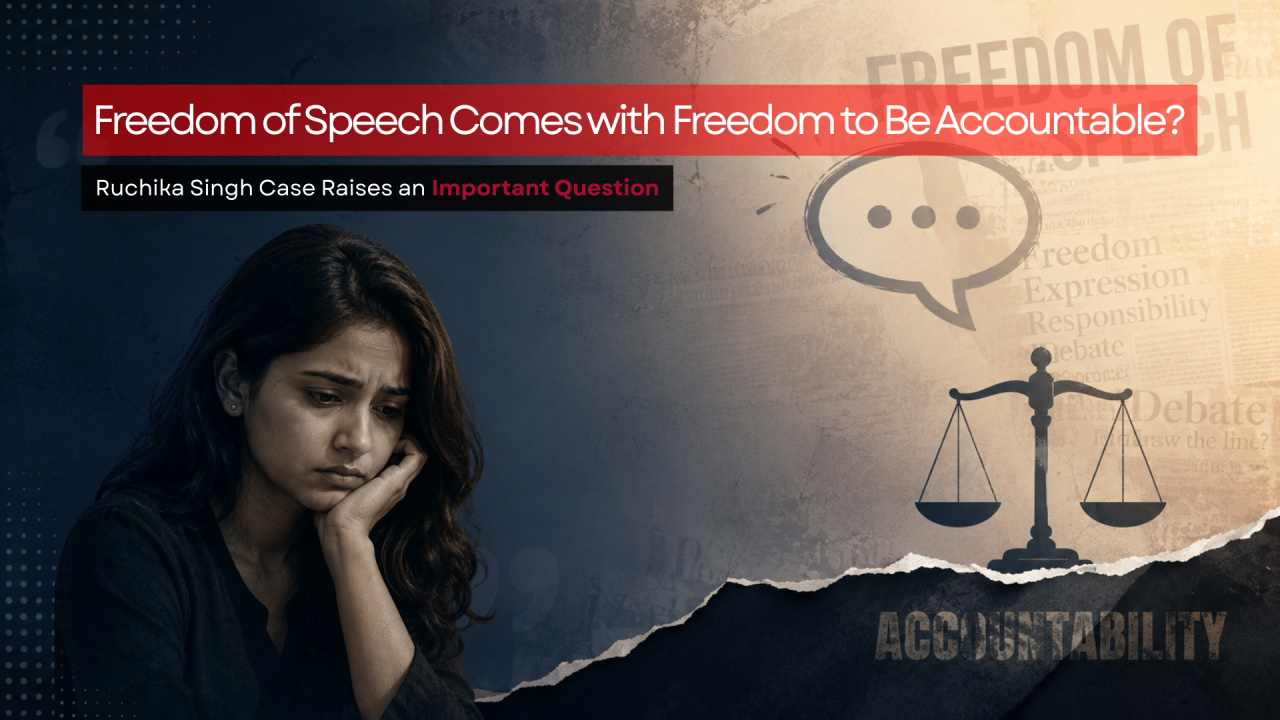
Freedom of speech is one of the cornerstones of every democracy. It empowers citizens to question governments, challenge policies, and express dissent without fear.
But an equally important question deserves our attention:
Does freedom of speech also mean freedom from consequences?
The recent Ruchika Singh case, arising from the NEET protest controversy, has once again brought this debate into the national spotlight.
According to publicly reported information, a video allegedly showing Ruchika Singh making abusive remarks against Prime Minister Narendra Modi during a protest circulated widely on social media. A complaint was subsequently filed, legal provisions under the Bharatiya Nyaya Sanhita (BNS) were reportedly invoked, and the matter is now under investigation by the authorities.
At this stage, the legal process is ongoing, and the facts will ultimately be determined through that process.
The Real Issue Is Bigger Than One Individual
Rather than focusing solely on one person or one incident, this case offers an opportunity to examine a broader constitutional and social question.
Every citizen has the right to:
* Criticize government policies.
* Question elected representatives.
* Participate in peaceful protests.
* Express disagreement.
These rights are fundamental to a healthy democracy.
However, democratic rights also coexist with legal responsibilities. When speech crosses into areas that may violate the law, institutions have the responsibility to examine those actions through due process.
Democracy Thrives on Respectful Dissent
History shows that meaningful change has often come from people who challenged authority.
But the most influential leaders have demonstrated that strong disagreement can coexist with civility.
Criticism backed by facts strengthens democracy.
Personal abuse often weakens public discourse.
The objective should never be to silence criticism. Instead, it should be to encourage a culture where debates focus on ideas, policies, and governance rather than personal attacks.
Lessons for the Digital Age
Social media has transformed every smartphone into a broadcasting platform.
A statement made during a protest can now reach millions of people within hours.
This reality makes digital responsibility more important than ever.
Before speaking publicly, we should ask ourselves:
* Is what I’m saying fact-based?
* Am I criticizing a policy or attacking a person?
* Would I stand by these words in a courtroom, a workplace, or before my family?
These questions are not about limiting expression—they are about using freedom wisely.
Freedom and Responsibility Must Go Together
A mature democracy protects the right to speak freely while also respecting the rule of law.
Rights and responsibilities are not opposites; they are complementary.
The ongoing legal proceedings in the Ruchika Singh case will take their own course. Regardless of the outcome, the larger lesson remains relevant for all of us:
Freedom of speech is one of democracy’s greatest strengths. But the way we exercise that freedom ultimately shapes the quality of our democracy.
What are your thoughts?
Where should society draw the line between legitimate criticism and speech that may attract legal consequences?

Dr. Neeraj Tiwari, PhD
I write about business leadership, workplace culture, and professional self-improvement-ideas that help individuals grow with clarity, lead with confidence, and build meaningful, successful careers.