Why ABFRL Bought Sabyasachi: A Business Strategy Case Study on Scaling Luxury Brands
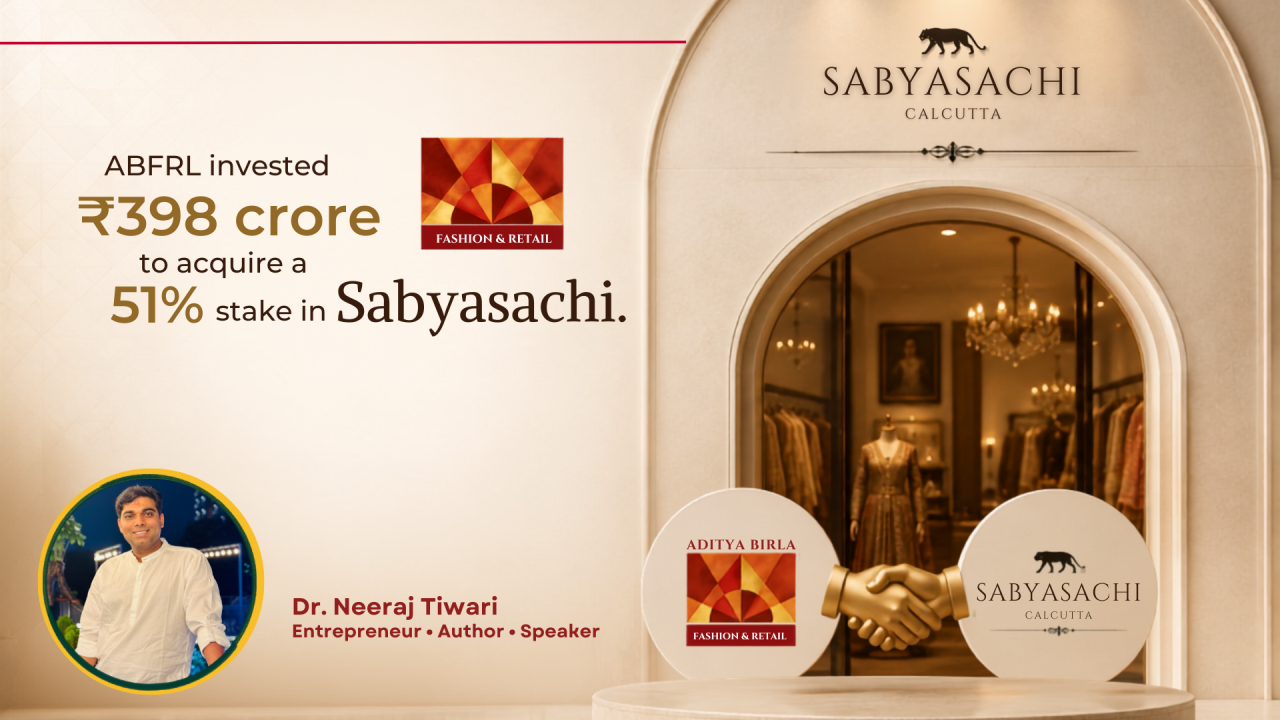
When Aditya Birla Fashion & Retail Limited (ABFRL) acquired a 51% stake in Sabyasachi for ₹398 crore, many viewed it as another mergers and acquisitions (M&A) deal in India’s fashion industry.
But if you look beyond the headline, this deal offers one of the most valuable business strategy lessons for entrepreneurs, investors, and business leaders.
This wasn’t just an investment in a fashion label.
It was an investment in one of India’s strongest luxury brands.
The Strategy Behind the Acquisition
Most acquisitions are driven by a simple formula:
- Acquire a successful company.
- Expand distribution.
- Open more stores.
- Increase revenue.
That approach works well for many consumer businesses.
But luxury brands don’t scale like factories.
And that’s where this case becomes interesting.
Sabyasachi’s Greatest Asset Isn’t Its Stores
Many people think Sabyasachi’s biggest strength is its brand name.
It’s not.
Its greatest asset is craftsmanship.
Every bridal lehenga, saree, and couture piece reflects hundreds of hours of work by highly skilled artisans.
These skills cannot be developed overnight.
You can build more retail stores in a year.
You cannot create master craftsmen in the same time.
For luxury brands, the real bottleneck isn’t demand.
It’s the ability to maintain exceptional quality while growing.
What ABFRL Really Acquired
This acquisition wasn’t just about increasing revenue.
ABFRL gained access to:
- One of India’s most trusted luxury fashion brands.
- Strong customer loyalty and brand equity.
- A premium position in the bridal and luxury fashion market.
- Long-term growth opportunities in India and global markets.
More importantly, it partnered with a brand that has spent decades building trust—something money alone cannot create.
Business Strategy Lesson #1: Brand Equity Is a Competitive Advantage
Products can be copied.
Designs can be replicated.
Prices can be matched.
But brand trust is incredibly difficult to build.
That’s why global companies continue investing billions in acquiring brands instead of creating new ones from scratch.
Business Strategy Lesson #2: Every Business Has a Constraint
Many entrepreneurs believe growth simply means selling more.
That’s only part of the equation.
Before scaling, identify your biggest constraint.
For software companies, it may be engineering talent.
For manufacturers, it may be production capacity.
For Sabyasachi, it’s preserving craftsmanship without compromising quality.
The smartest businesses scale around the constraint—not through it.
Business Strategy Lesson #3: Growth Without Quality Destroys Luxury
Luxury isn’t built on volume.
It’s built on exclusivity, consistency, and experience.
Expanding too quickly can dilute the very qualities that customers value.
Sustainable growth means protecting what makes the brand exceptional.
Final Takeaway
The ABFRL–Sabyasachi deal reminds us that successful acquisitions are not just financial transactions—they are strategic decisions.
The real value wasn’t in buying a fashion company.
It was in investing in a brand with enduring trust, exceptional craftsmanship, and long-term market leadership.
Whether you’re building a startup or leading a large enterprise, remember this:
Don’t just scale your business. Scale your competitive advantage.
Because in the long run, businesses don’t win by growing the fastest.
They win by protecting what makes them different.
What do you think?
If you were leading a large company, would you invest ₹398 crore in building a new luxury brand from scratch—or acquire an established brand like Sabyasachi with decades of trust and market leadership?

Dr. Neeraj Tiwari, PhD
I write about business leadership, workplace culture, and professional self-improvement-ideas that help individuals grow with clarity, lead with confidence, and build meaningful, successful careers.